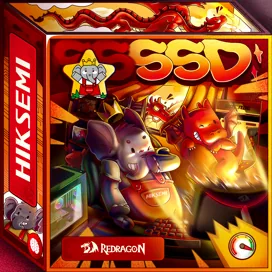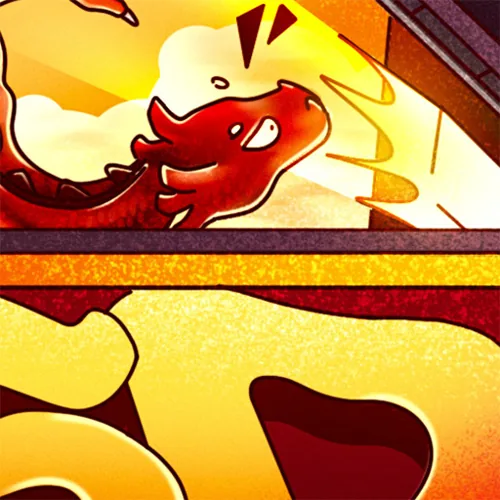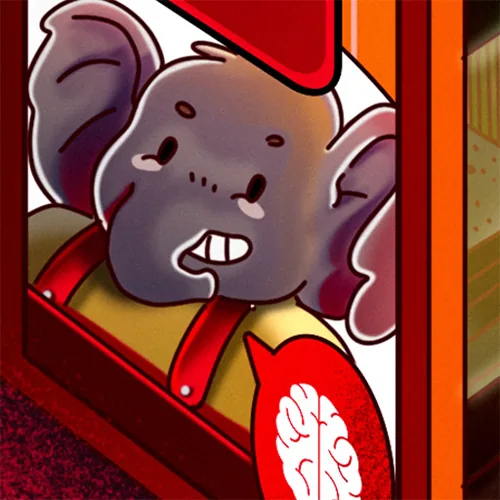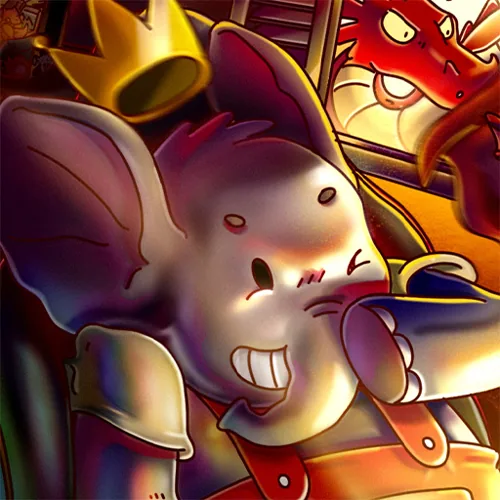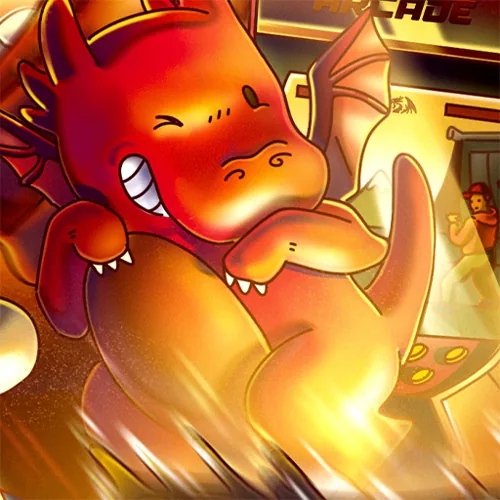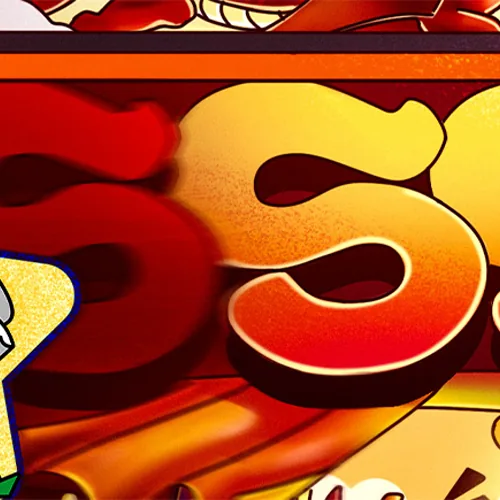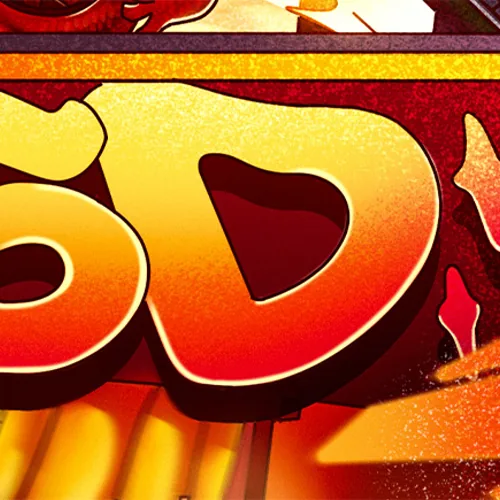
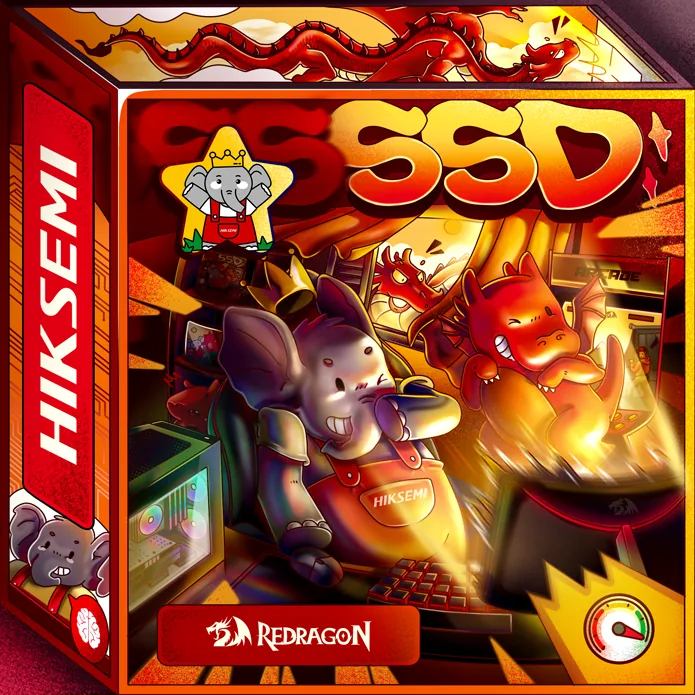
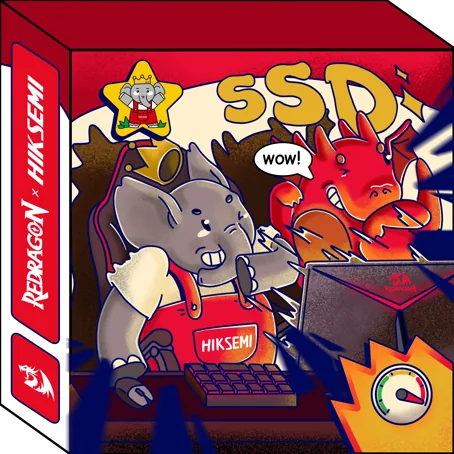
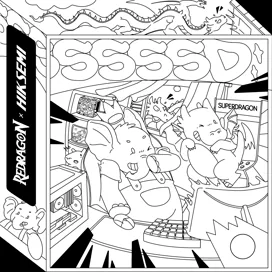
"Cubed" came last — after the art was finished, not before. It points to the physical format of the packaging and the idea of expanded power at the same time. It's also a direct reference to Super Nintendo cartridge covers from the 90s: that promise of an entire universe contained inside a box. The art sells the product through the same emotional mechanic that sold games thirty years ago.
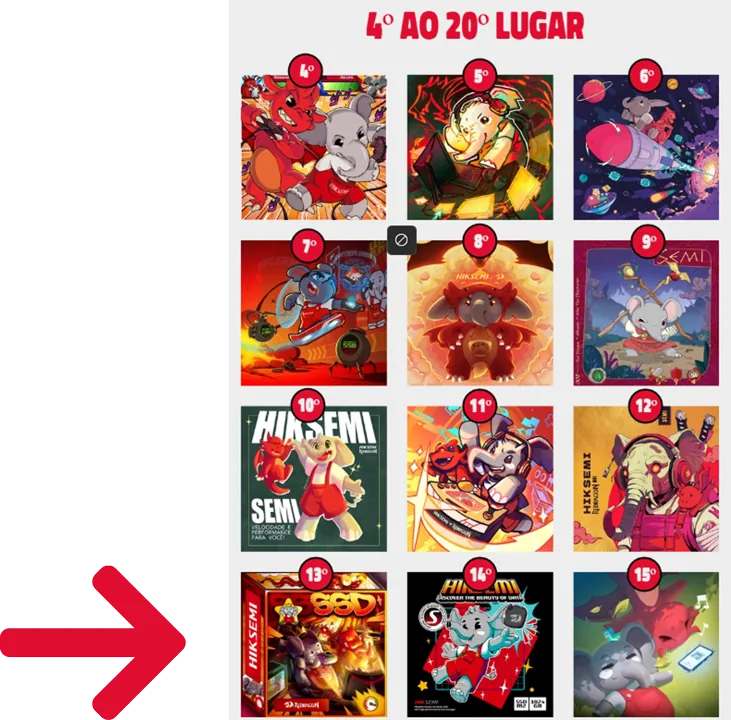
In 2025, Hiksemi and Redragon opened a public art challenge: design an original illustration for the cubic packaging of their new partnership SSD. Over a thousand illustrators entered. I took the challenge as a practical exercise in a specific stance — treating an open competition with the same rigor I'd apply to a paid brief. The result, "Cubed," placed 13th nationally.
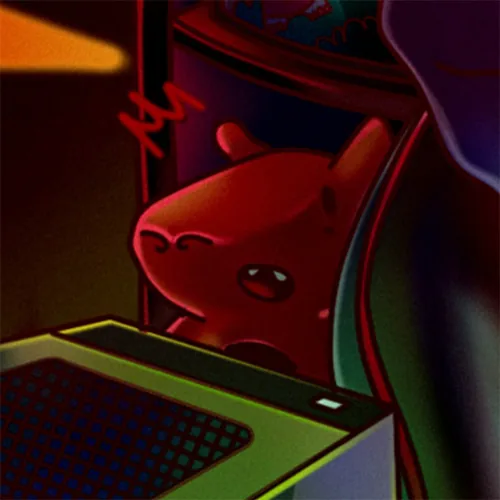
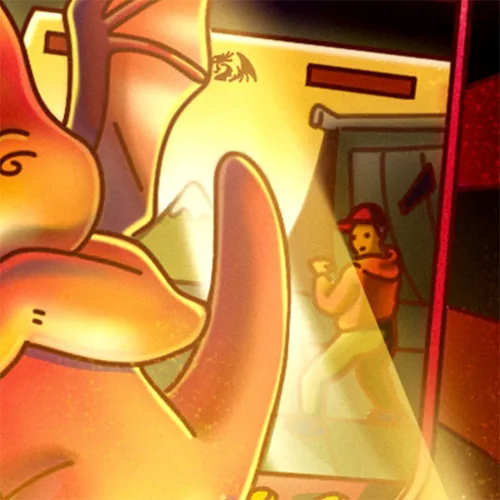
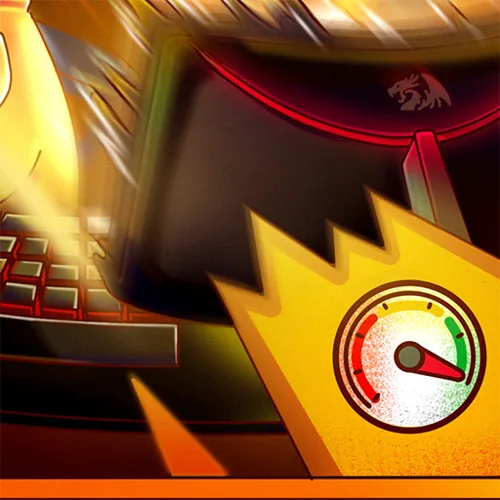
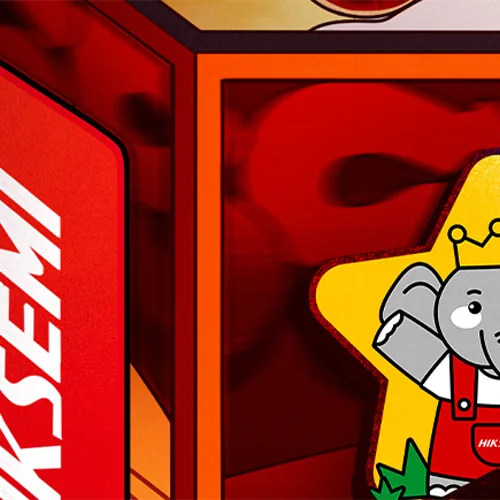
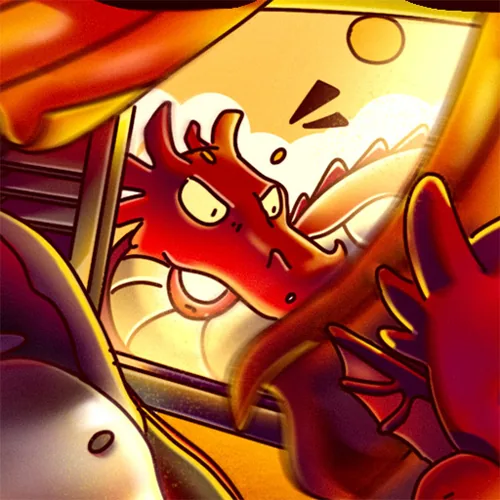
The final piece places the mascots Semi and Draquinho in an illuminated gamer room, surprised by the new SSD's speed, watched by a red dragon in the background. The title cuts across the scene in motion — a direct reference to the product's cubic format.
1
The brief had two layers: the art needed to function as promotional material for a tech product, but also survive when printed across the six faces of a physical cubic package. That meant solving visual hierarchy on a surface with no "front" — every face is a first impression. And it meant respecting two distinct brand universes (Hiksemi corporate, Redragon gamer) without one overpowering the other.
2
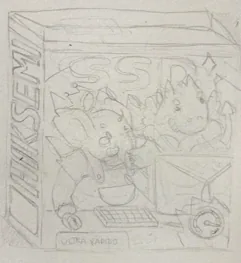
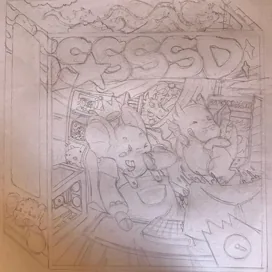
In the first draft, I imagined Semi and Draquinho in front of a monitor, surprised by the SSD's speed. Technology, movement, joy. It worked as a piece — but only as a piece, not as an argument.
First
version
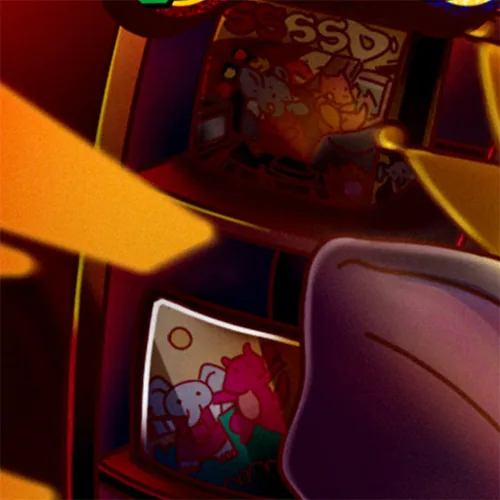
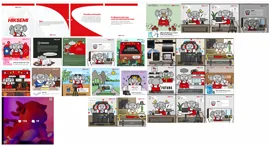
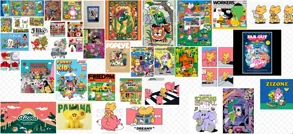
After studying winners from previous editions of the challenge, I saw the problem: the winning pieces didn't show the product being used — they showed a world where the product existed. The difference is huge. My draft was a scene. It was missing a world. I decided to restart from scratch.
4
What This Project Demonstrates
13th place out of more than a thousand entries isn't a victory — it's validation. More useful than that: the project is documented evidence of a specific stance. The capacity to kill your own work when it doesn't meet the problem, and restart from zero without ego.
Most portfolio cases show work that succeeded on the first attempt. This one shows work that succeeded on the second. Both skills matter, but only one of them is hard to teach.
Everyday Hell
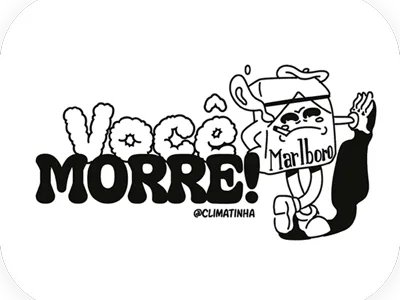
Art, sarcasm, and daily life — an illustrated vision of modern chaos, where humor reveals the contradictions of Brazilian life.
Customer Day - Marília Shopping
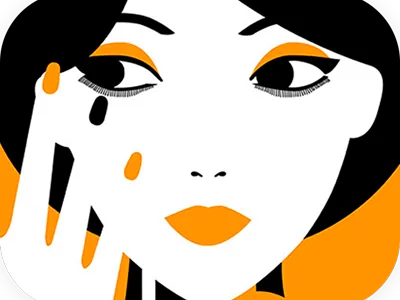
Original illustrations developed based on the style of Malika Favre.
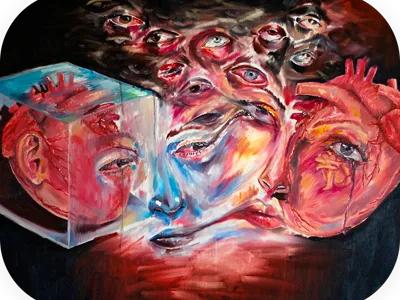
Samuclima (Authoral Painting).
Exploration of Human Emotions Through Symbolic Narratives, Red Tones, and the Heart as the Center of Vulnerability.